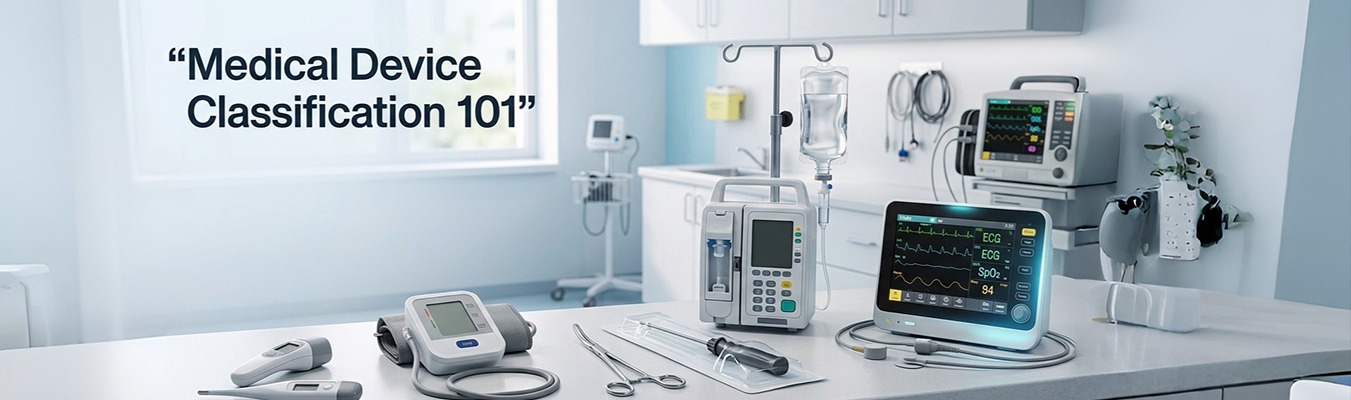
A medical device can be as simple as a bandage or as sophisticated as an implantable cardiac device. While these products serve very different purposes, they share one important requirement: they must meet regulatory standards designed to protect patients and users.
This is where medical device classification comes into play.
Classification helps regulators determine the level of oversight a product needs based on its potential risk. For manufacturers, understanding the classification of a device is an essential first step in planning testing, documentation, licensing and market approval.
The system can vary from one country to another. Canada, for example, uses four risk-based categories: Class I, Class II, Class III and Class IV. The U.S. FDA uses a three-class system. This guide focuses primarily on the four-class framework while highlighting the importance of understanding the specific regulations in your target market.
What Is Medical Device Classification?
Medical device classification is a risk-based regulatory system that groups devices according to their potential impact on patients and users.
The basic concept is easy to understand: devices with lower potential risks generally face fewer regulatory requirements, while higher-risk devices require more extensive evidence and regulatory scrutiny.
Classification is not based simply on how complicated a device looks. Regulators can consider several factors, including;
- The device’s intended purpose
- How it interacts with the body
- The duration of contact with the body
- Whether it is invasive or implanted
- Its technological characteristics
- The body part involved
- The potential consequences of device failure
This makes classification an important part of medical device regulatory compliance. Getting the classification wrong at the beginning can affect everything that follows, from testing and technical documentation to licensing and market entry.
Class I Medical Devices: Lower Risk, Simpler Requirements
Class I represents the lowest-risk category in Canada’s four-class system.
These devices typically have a relatively straightforward design and present limited potential risk during normal use. Examples can include certain bandages, manual wheelchairs and other non-invasive products.
Lower risk does not mean no regulation. Manufacturers still need to ensure that their products meet applicable safety, quality and performance requirements.
For businesses, one of the advantages of Class I classification is a generally simpler regulatory pathway compared with higher-risk devices. In Canada, Class I devices typically do not require a Medical Device License, although other obligations can apply to companies that manufacture, import or distribute them.
Examples of Class I devices
- Adhesive bandages
- Certain non-invasive medical products
- Manual wheelchairs
- Basic examination or support devices
The key takeaway is simple: Class I medical devices have the lowest level of potential risk within the four-class system, but manufacturers still carry responsibility for product safety and compliance.
Class II Medical Devices: Moderate Risk
Class II devices move into a moderate-risk category and generally require greater regulatory oversight.
Products in this category can include certain powered devices and diagnostic or therapeutic technologies. Health Canada lists products such as hearing aids and powered toothbrushes among examples of Class II devices.
At this stage, manufacturers need a more structured medical device regulatory strategy. Product design, intended use, risk management, performance evidence and technical documentation all become increasingly important.
In Canada, Class II medical devices generally require a Medical Device License before they can be imported or sold.
For manufacturers developing a Class II product, early regulatory planning can save considerable time. Understanding the applicable classification rules before investing heavily in testing or product development can help create a more efficient path to market.
Class III Medical Devices: Higher Risk
Class III devices present a higher potential risk and therefore face more demanding regulatory requirements.
This category can include invasive, implantable or technologically complex products. Examples under Canada’s framework include hip implants and shoulder prostheses.
At this level, medical device regulatory compliance involves considerably more than demonstrating that a product works as intended. Manufacturers may need to provide substantial evidence relating to safety, performance and clinical effectiveness.
Classification can also depend on specific product characteristics. For example, the duration of contact with the body, the degree of invasiveness and the intended clinical purpose can influence the classification.
For Class III manufacturers, regulatory planning should begin well before the submission stage. A strong strategy can bring together risk management, product testing, clinical evidence, quality systems and technical documentation from the beginning.
Class IV Medical Devices: The Highest Risk
Class IV represents the highest-risk category in Canada’s four-class medical device system.
These devices can have a critical role in diagnosing, treating or sustaining patients, meaning device failure could result in serious harm. Pacemakers and artificial hearts are examples of Class IV devices.
Because of their risk profile, these products face the most stringent regulatory expectations.
Manufacturers may need extensive technical and clinical evidence to demonstrate that a Class IV device is safe and performs effectively for its intended purpose. Health Canada identifies clinical trials, clinical reviews, meta-analyses and reviews of real-world evidence among potential forms of supporting clinical evidence for higher-risk devices.
For companies developing Class IV medical devices, regulatory compliance needs to be integrated into the product development process rather than treated as a final step before market launch.
What Determines a Medical Device Classification?
One of the most important things manufacturers need to understand is that classification depends heavily on the intended use of a product.
Two devices may appear similar but fall into different regulatory categories because they have different purposes, technologies or levels of patient interaction.
Regulators may consider:
- Intended UseThe purpose for which the manufacturer markets the device can have a major impact on classification.
- InvasivenessA device that enters the body can carry greater potential risks than a comparable non-invasive product.
- Duration of ContactTemporary contact, prolonged contact and long-term contact with the body can lead to different classification considerations.
- ImplantationImplantable devices generally require greater regulatory scrutiny because they remain inside the body and can have significant consequences if they fail.
- Risk of FailureThe potential harm caused by malfunction can influence the regulatory classification and evidence requirements.
- Technology and FunctionDevices that deliver energy, support vital functions or perform critical diagnostic or therapeutic functions may require additional controls and evidence.
This is why manufacturers should assess the complete product profile instead of relying on a generic category or a similar product already on the market.
Why Getting Classification Right Matters
Choosing the correct medical device classification is one of the earliest and most important regulatory decisions a manufacturer makes.
The classification can influence;
- Required testing
- Clinical evidence
- Technical documentation
- Quality management requirements
- Regulatory submissions
- Licensing or market authorization
- Post-market obligations
- Overall development timelines
An incorrect classification can create unnecessary delays and additional costs. It can also leave gaps in the evidence needed for regulatory approval.
A clear classification assessment gives manufacturers a stronger foundation for building their entire medical device regulatory strategy.
Medical Device Classification is not the same Everywhere
Another important point for manufacturers is that classification systems differ across international markets.
Canada uses Class I through Class IV. The U.S. FDA uses Class I, Class II and Class III, with regulatory controls increasing according to risk. Other markets, including the European Union, use their own classification frameworks and regulatory rules.
This means a manufacturer cannot simply assume that a device’s classification in one country will automatically apply elsewhere.
Companies planning international expansion should assess the regulatory requirements of each target market and determine the appropriate classification before preparing submissions.
How Regulatory Support Can Help
For manufacturers, medical device classification can become complicated when a product involves new technology, multiple functions, invasive applications or an unusual intended use.
A regulatory professional can help evaluate the device, interpret applicable classification rules, identify evidence requirements and develop a practical compliance strategy.
At Pharma Wizard, regulatory knowledge can help businesses approach medical device development with greater clarity. From classification and regulatory planning to documentation and compliance support, expert guidance can help manufacturers avoid preventable mistakes and prepare more confidently for market entry.
Final Thoughts: Medical Device Classification -Getting the Regulatory Foundation Right
Medical device classification provides the foundation for a product’s regulatory journey.
In a four-class system such as Canada’s, Class I generally represents lower-risk devices, while Class II, III and IV involve progressively greater potential risk and regulatory oversight. The classification can influence testing, evidence, documentation, licensing and market access.
For manufacturers, the smartest approach is to determine the correct classification early and build the regulatory strategy around it. A well-planned classification assessment can make the development process more organized, reduce regulatory surprises and create a clearer path toward compliance.
When it comes to medical devices, getting the classification right is not just about ticking a regulatory box. It is about building the right foundation for safety, quality and successful market entry.